
Alocasia Dragon Scale Care Guide: Light, Water, Soil & Common Problems
Learn how to care for Alocasia Dragon Scale with practical tips on light, watering, humidity, soil, fertilizer, propagation, and troubleshooting common issues.
Alocasia Dragon Scale Care Guide
Alocasia Dragon Scale (Alocasia baginda 'Dragon Scale') is a collector-favorite tropical aroid known for metallic, silvery-green leaves and dramatic dark veining. This guide covers the essentials to keep it healthy indoors without the guesswork.
Quick answer: Give Dragon Scale bright indirect light, 60%+ humidity, and evenly moist (not soggy) soil in a chunky aroid mix.
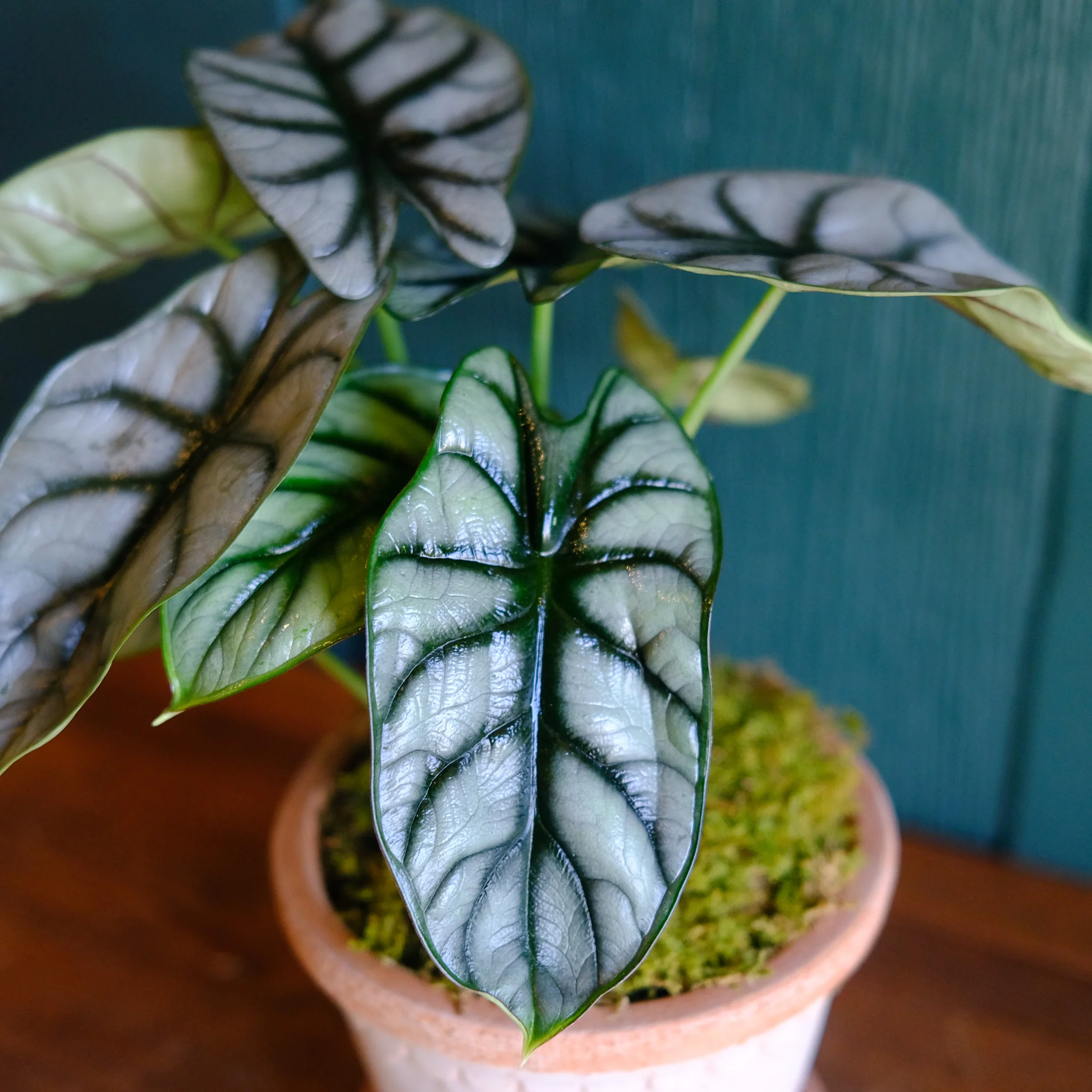
Plant Snapshot (At a Glance)
- Botanical name: Alocasia baginda 'Dragon Scale'
- Common names: Dragon Scale Alocasia
- Plant type: Tropical aroid
- Native range: Borneo (cultivar from Southeast Asian lineage)
- Difficulty: Intermediate
- Pet safety: Toxic to pets
- Best placement: Bright room near an east or north-facing window
Light Requirements
Dragon Scale grows best in bright, indirect light.
- Ideal: near an east window or set back from a brighter south/west window
- Tolerates: medium indirect light (with slower growth)
- Avoid: harsh direct sun that can scorch leaves
Signs your light is off
- Too much light: faded color, crispy patches
- Too little light: small leaves, slow growth, leggy petioles
Watering (How Often to Water Alocasia Dragon Scale)
Water when the top 1–2 inches of soil feels slightly dry.
- In spring/summer: often every 5–9 days depending on heat and pot size
- In fall/winter: reduce frequency
- Always: water thoroughly, then let excess drain fully
Avoid overwatering: This plant is prone to root rot if soil stays waterlogged.
Water Quality Tips
- Best: filtered or distilled water
- If using tap water: let it sit overnight when possible
Humidity & Temperature
Dragon Scale prefers:
- Humidity: 60–80%
- Temperature: 65–85°F (18–29°C)
If your air is dry:
- Use a humidifier
- Group plants together
- Keep away from HVAC vents
Best Soil & Pot Type
Use a chunky, well-draining aroid mix that still retains some moisture.
Recommended Mix
- 40% potting mix
- 30% orchid bark
- 20% perlite or pumice
- 10% horticultural charcoal (optional)
Pot: Use drainage holes to prevent soggy roots.
Fertilizer Schedule
Feed during active growth (spring/summer):
- Balanced liquid fertilizer at 1/2 strength
- Every 4 weeks
- Pause or reduce in winter
Repotting
Repot about every 12–18 months or when rootbound.
- Roots circling the pot heavily
- Water runs through too quickly
- Growth slows in warm months
Best done in spring.
Pruning & Grooming
- Remove yellow or damaged leaves at the base
- Wipe leaves monthly for better light absorption
- Rotate every 1–2 weeks for even growth
Propagation
Most reliable method: division during repotting.
Steps
- Remove plant from pot and locate natural rhizome divisions
- Separate sections with roots and at least one growth point
- Pot each division in fresh aroid mix
- Keep warm and humid until new growth resumes
Common Problems (and Fixes)
Yellow Leaves
Likely cause: Overwatering
Fix: Let topsoil dry slightly more between waterings and check drainage.
Brown Edges or Crispy Tips
Likely cause: Low humidity or mineral-heavy water
Fix: Increase humidity and switch to filtered/distilled water.
Leaf Loss
Likely cause: Seasonal dormancy or stress from environment shifts
Fix: Reduce watering slightly in cool months and keep conditions stable.
Pests (Spider Mites, Thrips, Mealybugs)
Likely cause: Dry air or nearby infested plants
Fix: Isolate, rinse foliage, and treat weekly until clear.
Is Alocasia Dragon Scale Toxic to Pets?
Yes. Like other Alocasias, it contains calcium oxalate crystals and is toxic if chewed or ingested.
Safety note: Keep away from pets and children.
FAQ
How fast does Alocasia Dragon Scale grow indoors?
Moderate growth in warm, bright, humid conditions; much slower in winter.
Why are my Dragon Scale leaves curling?
Usually underwatering, low humidity, or sudden temperature stress.
Can Alocasia Dragon Scale handle low light?
It can survive in medium light but won’t thrive or size up quickly.
Related Care Guides
- Alocasia Yellow Leaves? 9 Causes + How to Fix Them Fast
- Alocasia Yellow Leaves Drooping: Causes + How to Fix It Fast
- Alocasia Yellow Leaves in Winter: What Changes Indoors + How to Fix It
- Alocasia Root Rot: Early Signs + Step-by-Step Treatment
Final Thoughts
If you can provide stable warmth, high humidity, and careful watering, Alocasia Dragon Scale rewards you with some of the most dramatic foliage in houseplant collecting.
Exotica Botanica – your trusted source for rare houseplant care guides, tips, and tools.